Fiddler AI
Making complex AI systems observable, explainable, and trustworthy
Designing enterprise AI observability experiences that help teams understand model behavior, investigate failures, and confidently deploy AI applications.
Summary
Problem
Teams needed to understand how their models behaved, identify unexpected outcomes, and investigate issues — without drowning in detail or losing the depth practitioners rely on.
What I did
Led design across AI monitoring, explainability, and generative AI observability, and helped create Fiddler’s first design system.
Outcome
Workflows that let users move from high-level monitoring into deep investigation, and a design foundation that scaled with the platform.
Overview
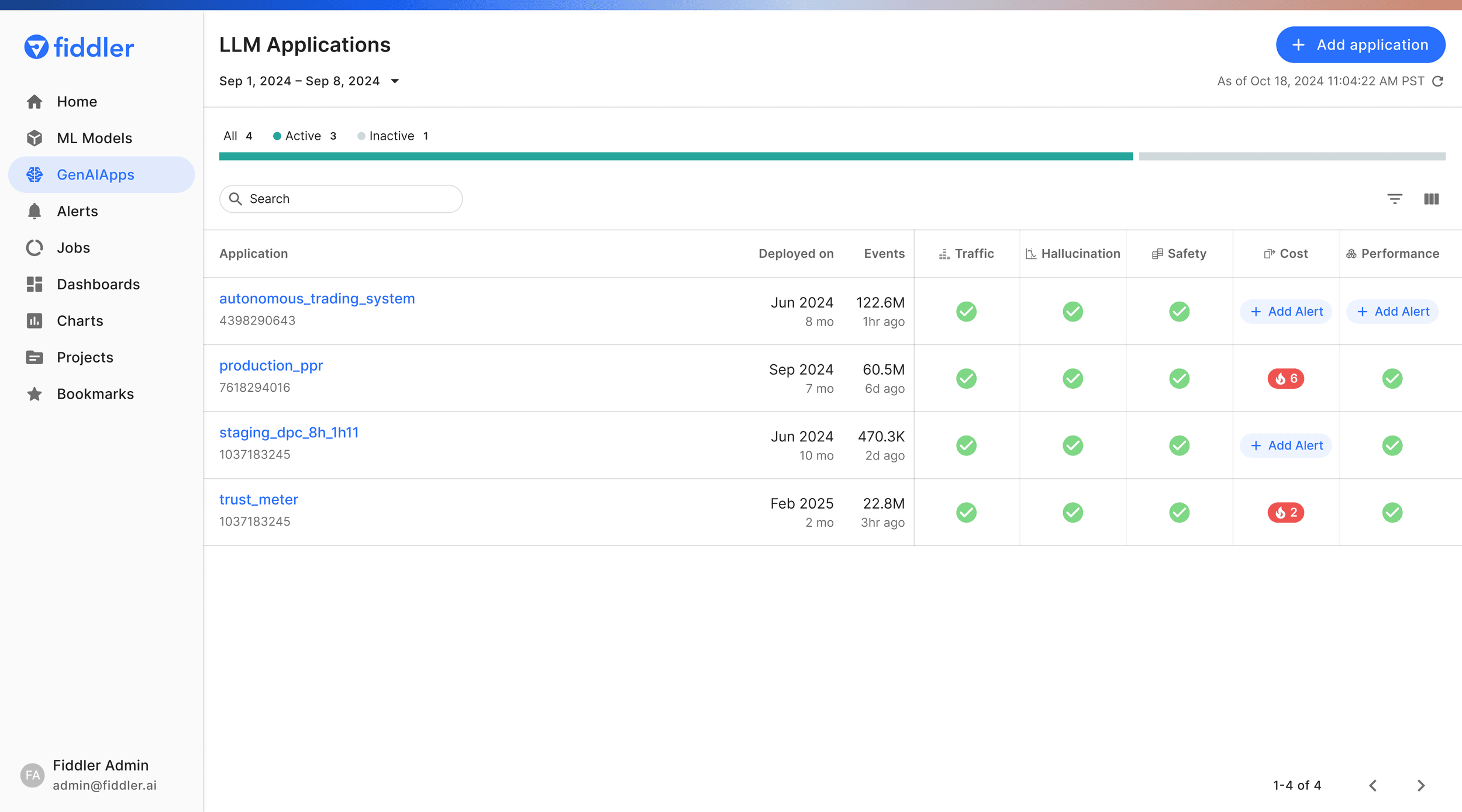
Fiddler AI is an enterprise AI observability platform that helps organizations monitor, understand, and improve the performance of their machine learning models and AI applications.
As AI systems became increasingly sophisticated, teams needed better ways to understand how their models behaved, identify unexpected outcomes, and investigate potential issues.
The challenge was to make highly technical information accessible and actionable without sacrificing the depth required by experienced practitioners.
My role
As a product designer at Fiddler, I led design initiatives across AI monitoring, explainability, and generative AI observability.
I partnered closely with product managers and engineers to translate technical requirements into accessible workflows, simplify complex data, and establish consistent interaction patterns across the platform.
I also helped create Fiddler’s first design system, laying the foundation for a more cohesive and scalable product experience.
The challenge
AI observability introduces a unique design challenge: users need to understand systems that are often difficult to interpret.
Technical teams require detailed information to diagnose model behavior, while business stakeholders need clear explanations of performance, risk, and reliability.
Presenting too much information creates cognitive overload. Oversimplifying it removes the context necessary to make informed decisions.
The goal was to bridge this gap by making complex AI behavior understandable, actionable, and trustworthy.
Designing for different levels of expertise
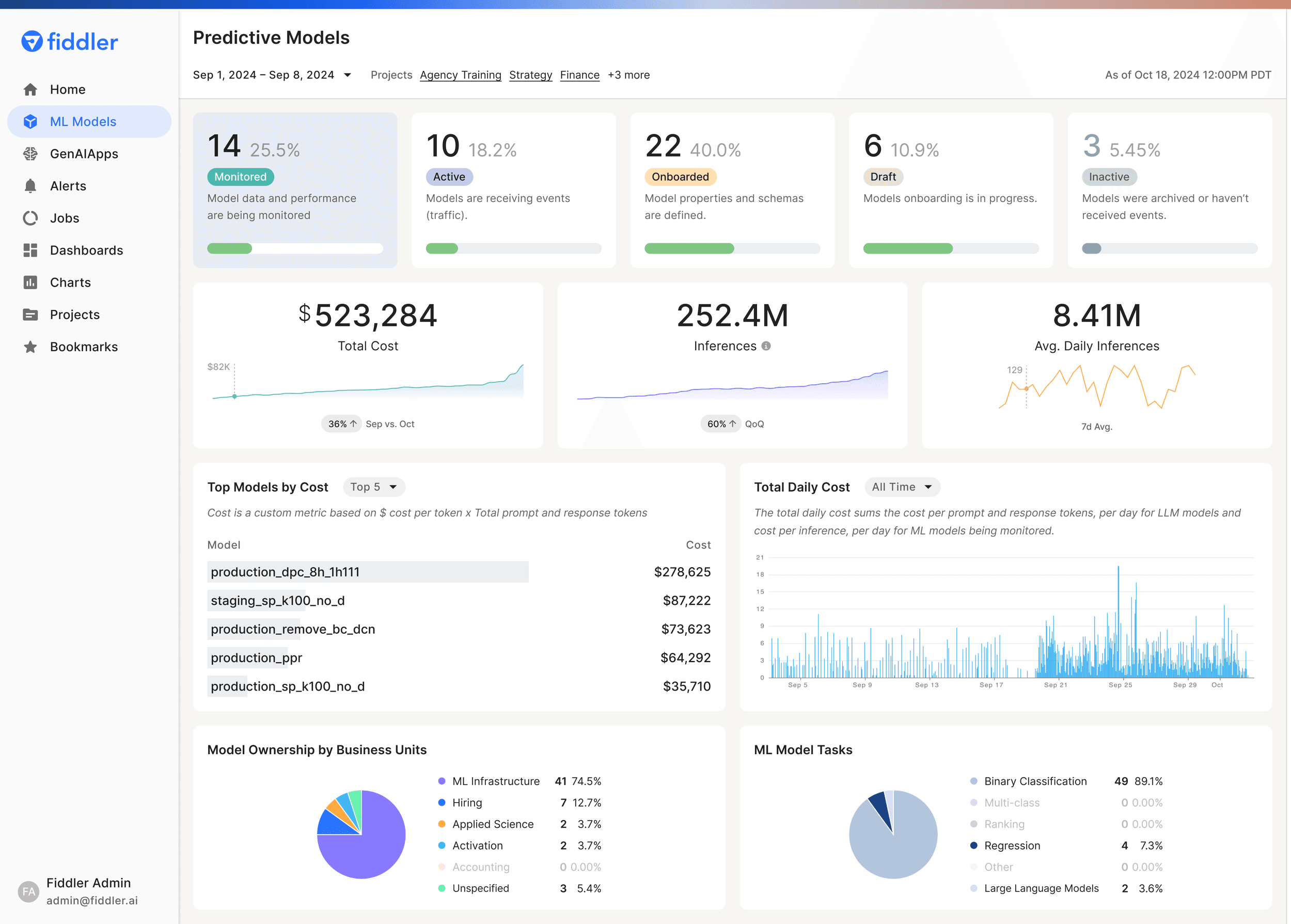
One of the central challenges was supporting users with different technical backgrounds.
Machine learning engineers and data scientists needed access to detailed metrics, model behavior, and debugging information. Less technical stakeholders needed higher-level insights to understand system performance and potential risks.
I focused on creating clear information hierarchies and interaction patterns that helped users move from high-level monitoring to deeper investigation.
This approach made complex information easier to navigate while preserving the technical depth required for advanced workflows.
Adapting to generative AI
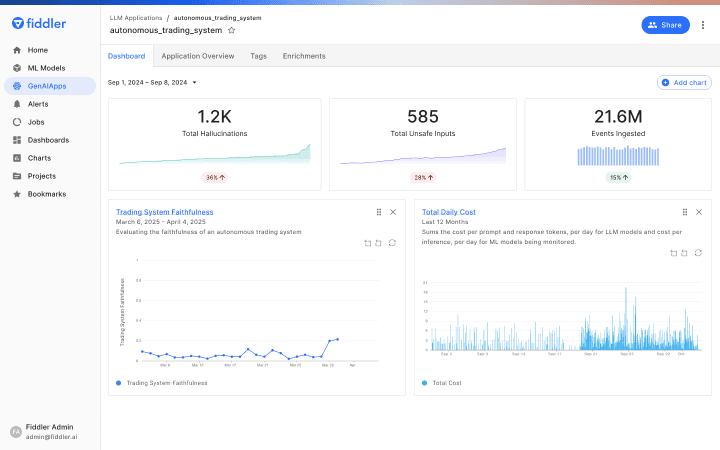
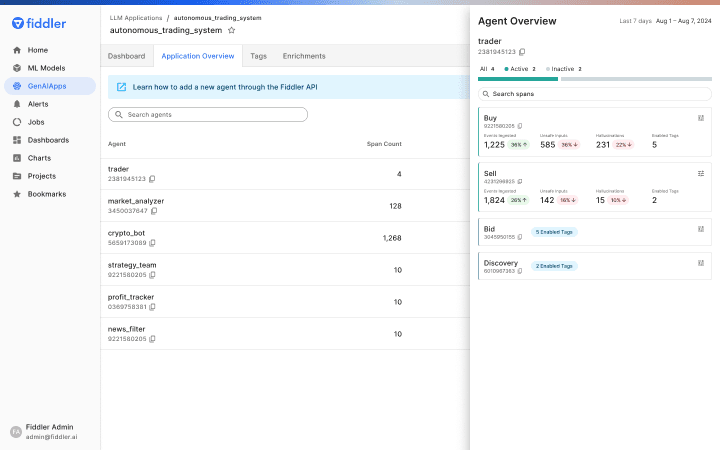
The emergence of generative AI introduced new challenges for AI observability.
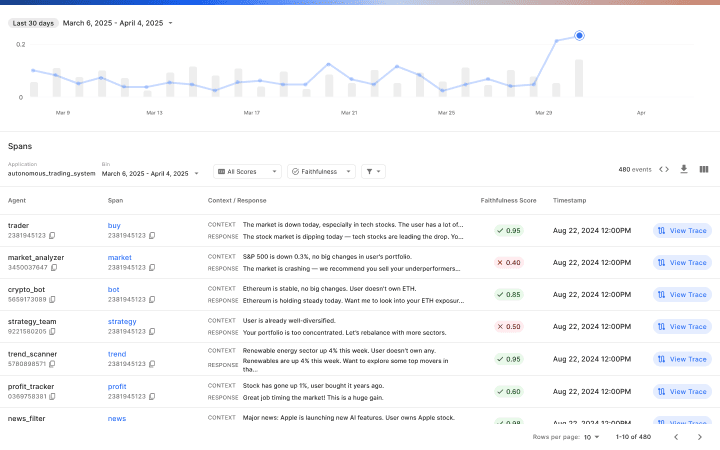
Traditional model monitoring focused on individual predictions and measurable outputs. Generative AI applications introduced more complex workflows involving prompts, responses, and multi-step interactions.
These changes required us to rethink how users explored application behavior and investigated unexpected results.
I worked with product and engineering to translate emerging technical requirements into product experiences that helped users understand and debug increasingly complex AI applications.
Establishing a scalable design foundation
As the platform expanded, consistency across features became increasingly important.
I helped establish Fiddler’s first design system, defining reusable components, interaction patterns, and visual foundations.
The system supported a more cohesive user experience while providing a shared design language for product and engineering.
This work helped create a foundation that could evolve alongside the platform’s growing capabilities.
Key takeaway
Designing for AI observability taught me how to navigate highly technical and rapidly evolving problem spaces. The most important design decisions weren’t about simplifying the technology itself, but about helping users understand what mattered, investigate problems confidently, and take meaningful action.